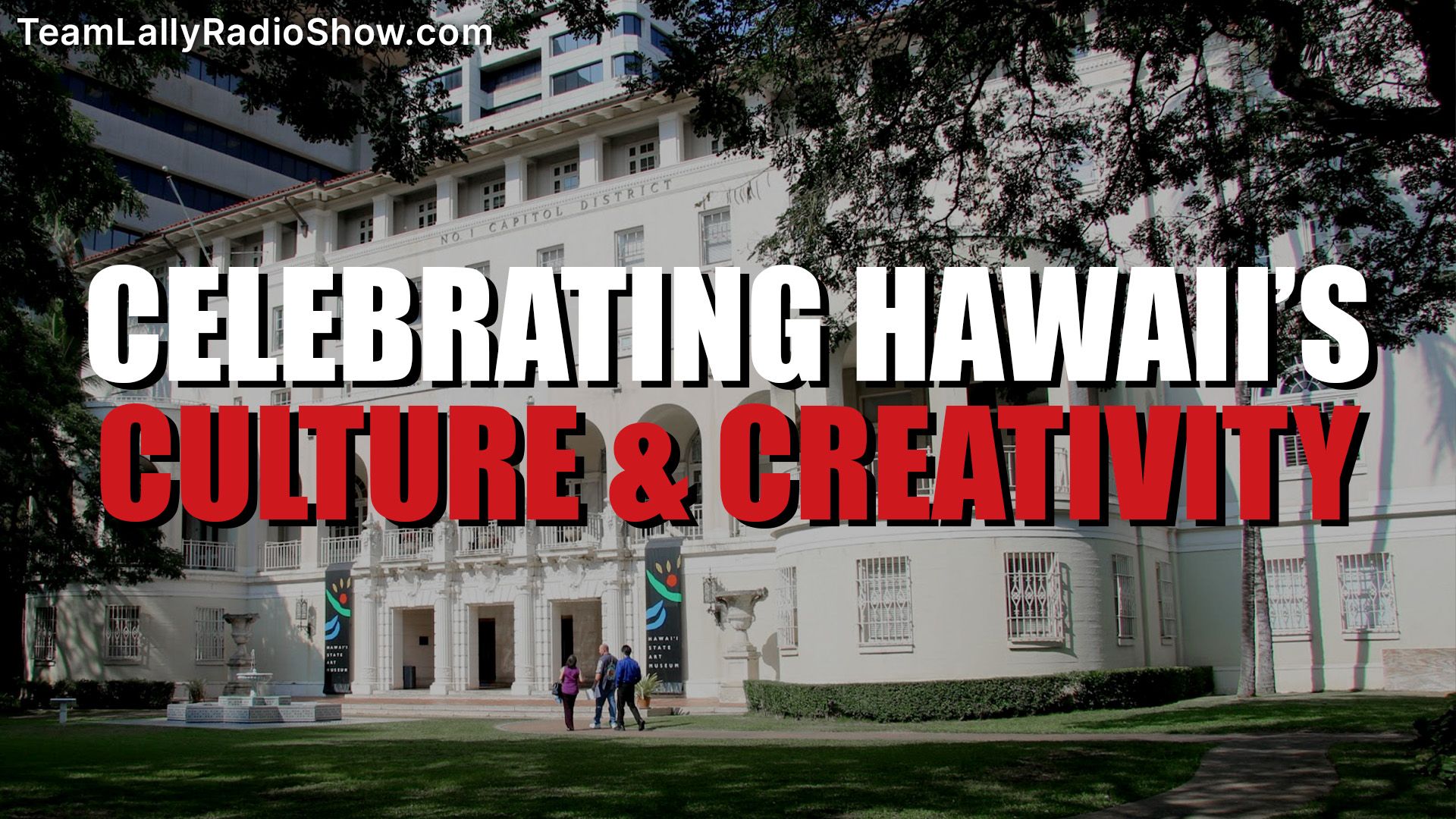
This week on the Team Lally Real Estate Radio Show, we interview Karen Ewald, Executive Director of the Hawaiʻi State Foundation on Culture and the Arts. Karen highlights the vital role of public funding in sustaining arts and culture, while also sharing details about exciting community events such as the First and Third Friday art walks. She discusses additional programs that community members can get involved in and outlines her future goals for the SFCA, including a new strategic plan shaped by community feedback, fostering more in-person gatherings across the islands to strengthen arts advocacy, expanding initiatives that connect the arts with mental health and underserved communities, and celebrating Hawai‘i’s Pacific connections through cultural festivals.
We also have our Expert We Trust. Kyle Shimoda of INPAC Wealth breaks down the benefits of Delaware Statutory Trusts (DSTs) for real estate investors.
Watch or Listen to the full episode
Ready To Find Out How Much Your Home Is Worth?
Karen Ewald is the Executive Director of the Hawaiʻi State Foundation on Culture and the Arts (SFCA). Originally from California, she relocated to Hawaiʻi in 2013 and has since built an impressive career spanning over a decade with the SFCA—as an arts administrator, museum director, and now leading the entire organization. Prior to her time in Hawaiʻi, Karen worked at the Natural History Museum of Los Angeles County, overseeing programming, budgeting, and educational outreach. When she’s not busy championing the arts, you might catch her carving waves while surfing or experimenting in the kitchen with new recipes.
The Hawaiʻi State Foundation on Culture and the Arts has been the state government’s arts agency since 1967, with a mission to promote, perpetuate, preserve, and encourage culture and the arts, history, and the humanities as central to the quality of life of the people of Hawaiʻi. The Foundation administers programs that bring art into public spaces, support local artists, and connect communities with cultural experiences. It also oversees statewide initiatives such as the Art in Public Places Program and the Artists in the Schools Program, ensuring that creativity and cultural heritage remain accessible to people of all ages and backgrounds across the islands.
To reach Karen Ewald, you may contact her in the following ways:
Phone: 808-586-0300
Email: [email protected]
Website: sfca.hawaii.gov/
Interview Transcription
ATTILIO:
Speaking of people that are operating at a high level and giving back to our community and making things really nice for us here on Oahu, our guest today is the executive director of the Hawaii State Foundation on Culture and Arts. Originally from California, she moved to Hawaii in 2013 and has spent the past 11 years with the sfca serving as an arts administrator, museum director, now leading the organization.
ADRIENNE:
Before Hawaii, she worked at the Natural History Museum in Los Angeles. Outside of work, she enjoys surfing and cooking in her free time. We are excited to learn more about her journey and the impact of sfca across the islands. Please welcome our guest. Karen ewld,
ATTILIO:
Hi, Karen, hi, hi. Nice to meet you guys. You too. Yeah. I think I don’t know if we met you guys directly, or maybe got your card, or maybe we did, but we did go to one of the first Friday.
ADRIENNE:
First Friday, yeah,
ATTILIO:
so that’s awesome. Leading to you being on this show and us wanting to support arts in our community. Was that event that you guys are doing so good job on that I liked it. A friend told us about it. Great success. Yeah, a friend told us about it, and we I think we’ve gone like two times, maybe so, and it’s a repeating calendar reminder on our calendar. So if we feel like we want to get some art, get some arts on on a Friday night. And you know what? Here’s what I tell the couples out there listening, it’s a good date night. Good date night.
KAREN:
It is a good date night. And it’s free. And you know, it’s got, it’s got all different kinds of forms of art. And yeah, I’m glad you’re spreading the word,
ATTILIO:
yeah. And then, yeah, we bought stuff from the vendors there. We supported all the artists with other things. And I have some of the art on my wall. And everybody, it’s important that people have art in their lives. So tell us about, you know, like, I don’t know, whatever describe the work you do for the people of Hawaii, in regards to this position you have,
KAREN:
yeah. So every, every state has an arts agency that’s publicly funded. It’s federally funded and funded by the state, the respective state. So we are the state arts agency of Hawaii, and basically, I am the Executive Director for the state arts agency. There are about 20 people that work within the art agency, and we serve the entire state of Hawaii through pretty much engaging the community with arts education, administering funds for arts and culture organizations throughout the state. Yes, and also just kind of economic driver for visual artists that we have a huge collection of contemporary art of Hawaii that we do show at the museum, and also throughout the entire state and state buildings, nice. So that’s pretty much in a nutshell what we do. Okay, and it’s great
ADRIENNE:
work. So when you say the museum, it’s the capital modern museum, yeah,
KAREN:
yes, that’s actually the other major pillar that’s underneath the state arts agency. Capital modern is. It was originally it is. It is technically and still called the Hawaii State Art Museum by statute, but it was rebranded to capital modern from high Sam a while ago. And yeah, established since 2002 but in the last maybe six years are a little bit longer. We had a little during the pandemic, but really gained a lot of momentum and visitorship and interest. So really great to provide a free space.
ATTILIO:
It’s a nice historical building. I I, when I go with my kids to museums, they’re like, come on, because I like to read this stuff. The kids are like, they’re just jamming through the thing. No, I like to stop. So I read the history. It’s amazing all the different things in the ownership that and the cycles and the remodeling that that building has gone through to to what it is today. Because I think the main courtyard was a pool right back in the day it was,
KAREN:
exactly, it was, uh, it was the old Royal Hawaiian hotel back, way, way back, believe, during King Kalakaua times. But then more semi more recently, was the Armed Forces YMCA. And there were, yeah, even the gallery spaces, I think was one of them, was a weight room, yeah, you know it was, it housed the the men from the war and and the pool, yeah, the sculpture garden, which, for those who haven’t been Please come, because it’s free and beautiful. The sculpture garden is, it became kind of a gallery within itself. And it was a pool at the time. It’s actually because of historic preservation purposes. It can still be a pool again, if, if they want it to be
ATTILIO:
nice. So you can go enjoy some art and maybe do some cannonballs in the future,
KAREN:
exactly future when there, if there’s water,
ATTILIO:
yeah. What I like about it is we you can sit around that edge and then the musicians, or, you know, whatever, the stage at the other end. Yeah, and it just, you know, what I love is just watching all the little kids just dancing and that former pool area, it’s really nice. And there were people just getting up and enjoying themselves and listening to the music and enjoying the art. Adrienne, out of that question, yeah, go or go ahead, I was
KAREN:
just gonna say it has become just such a central space for the community, and we’re just really proud of that, yeah, for sure.
ADRIENNE:
So, so Karen, what other programs can the community get involved with, with the sfca and the capital modern Yeah,
KAREN:
for that’s a really great question. So we do have a lot of different programs. Our artists in the schools program is like, is pretty much one of the most robust that we have, and that’s where, in partnership with with teachers from public and charter schools, teaching artists or organizations go into those schools and actually activate the classroom and arts education, which the DOE, you know, there’s a little, there’s a bit of A gap in that, so we kind of help to fill that gap. So it’s a really great way for anybody who’s involved in the DOE, or who who has a child in school, if they want to learn more about that, they should definitely contact us to see if their school is involved in that program. And we also do have for, you know, for anybody who’s just throughout the state interested in going to spaces like the donkey mill on the corner, or Lanai Arts and Culture Center or the Maui Arts and Cultural Center on mount on on Maui, we we provide funding for those, those spaces. So if there are any other arts and culture organizations, nonprofits that do programming that are interested in receiving more funding from the state and federal government. They should reach out to us as well to see how the application process goes. Yeah, and then also, just like more and more dying. I mean, it’s all dynamic, but I should say, in terms of capital modern we always welcome volunteers to help us out with our events. Yeah, we have incredible events. We’re hoping to have a Pacific festival, hopefully by next year. And for those who just really want to be involved and help out, we’re very happy to fold you into our team, because we have such an incredible team. So those are kind of the big pillars that we that that people can get involved in, or at least learn more about.
ADRIENNE:
So you you can, so you need more volunteers. And then, what if you wanted to be like a vendor? Because I do notice that there’s a lot of small businesses, yeah, is it like, how did they apply to be on that list
KAREN:
that’s through our Maury art and flea and they could definitely contact us as well in order to get in touch with that. Yeah, but that’s a really great thing to Thanks for bringing up earlier the market that we have upstairs, that’s through Maury art and flee, and it’s incredible to have, yeah, the local artisans and vendors be able to sell their stuff, right? So, yes, any new folks that are interested in selling, we can give that contact information as well.
ATTILIO:
Yeah. I mean, we were up there and we were able to, I don’t know about, like, some banana bread from a guy that’s, you know, making it from his grandmother’s recipe. There was a lady I bought some art. She was, it was a reprint of her original art. But I was like, wow. And yeah, and then, but for my daughter, yeah, there’s some stickers, stickers, cool stickers. But I bought a pair of earrings, about a pair of earrings. And you know what I did like for, especially for my daughter, is that I bought her a pair of earrings, and I took a picture of the artist, because I said I wanted you to know who created this great gift that I’m giving him. And so they were really that, yeah,
KAREN:
really keep in mind, though, art, you know, the arts, if we publicly fund the arts as robustly as we can, yeah, it’s really an economic driver, right? So being able to provide a free space through general funds from the government so that, so that vendors can bend the way that they do, and our artists down the lawn can play their music. It’s really, it really is a return on investment where
ATTILIO:
you know, and then if you know, if I’m sorry, if your message, if you said it again, but where does most of the funding come from?
KAREN:
Most of the funding comes from? Well, it’s actually, it’s twofold. It’s the state, the state legislature with our general fund appropriation, and then the federal government. So that’s National Endowment for the arc, yeah, yeah. And certainly, we do have our funding from the mea this year, so that’s good,
ATTILIO:
yeah? And then have we? And let’s we, agent, I ain’t running for office, so we can step on toes all day long. And, you know, with any of the new the different president that is in place, are you, are you experiencing any cuts to any of this stuff?
KAREN:
Yeah, no, that’s a really great question. Thankfully, you know, in the beginning, there was, there is concern, I the current administration is, did propose for the next. Each fiscal year, 2027, to eliminate completely the National Endowment for the Arts, yeah. So that would be a million dollar loss on our end. Would be really significant, yeah, yeah. So, and that was a that was a concern that we had this year as well, in terms of, just, you know, the doge situation happening, you know, all that stuff. Thankfully, the chairman for the National Center for the Arts was able to, you know, by stats, by the Constitutional rights, or whatever we are supposed to be funded as the arts agency. So that’s good that came through. So we’ll see what happens next year. I know that there are a lot of boots on the ground in DC, just trying to get everybody to understand the value of public funding for the arts.
ATTILIO:
Yeah, yeah. You know, yeah. It, you know, I just, you know, what’s great about AI? You just put pump something in there, and it says, and I knew, I know that there’s, there’s going to be some interesting, you know, some, some non tangible benefits that. But people don’t realize that when you have out a new community, we can have this like sterile environment in government and offices and all around our community. We need to have an art cognitive and emotional development. Engaging with art can boost creativity, critical thinking and problem solving skills. It can also enhance emotional intelligence, empathy and the ability to understand and respond to emotion of others. Artistic activities like music, painting or writing can have therapeutic benefits, reducing stress and promoting mental well being. You know, we do, from time to time have Jack handy come in and be a spokesperson. And you know what Jack would say, friends, you need to have more art in your life because you’re just so stressed out.
KAREN:
Great, true,
ATTILIO:
yeah. So
KAREN:
it’s a community driver, for sure, it’s a community builder.
ATTILIO:
You know, people don’t realize when, like, I have kids that live in Scottsdale, and Scottsdale, the city of Scottsdale, is one of the greatest communities, in my firsthand opinion, of seeing art everywhere. And they have specifically, I think it was one of the first cities that specifically budgeted, like, something like 1% of the city’s budget to art, and you just see it everywhere. And I know that’s awesome, that that is your goal. You know, we gotta be a goal, getting art everywhere in all the different spaces. But Adrienne,
ADRIENNE:
so speaking of that, what are your future goals for the sfca,
KAREN:
you know, the great question too, yeah, the future goals, I would say, you know, our funding kind of changed slightly. So we’re looking at, you know, with the changes that we have, that we have, we’re looking at how, what can we do differently? We have a new strategic plan that the board of the commissioners is going to vote on very soon, and that came out of a lot of listening sessions with the public. It looks like what what people want to see more of or more physical gatherings? Yes, of us to really get people together on all the islands, to actually talk about arts advocacy and and just how better we can serve the public through through what they want, through actual physical conversations. And then we do have some initiatives from the NEA, which we’re excited about, where there’s money that needs to be spent specifically towards arts and health, to your point. So we were looking at, how can we administer those funds through arts and mental health. You know, we did some, we did help with some response to the Maui wildfire, and we’re looking forward to just looking to see how we can actually be more proactive in mental health and arts. And you know, we’re looking at better the population of the veterans. We’re looking at schools, underserved communities, just being more in the field and more out there and and then back to just what I was saying earlier about having, you know, fest pack happened last year at Festival of Pacific, and we, we really wanted to kind of play on that and see if we could maybe just do a mini festival with the Pacific diaspora communities here in Hawaii, not only the Hawaiian host culture folks, but also just folks from all over the Pacific. So yes, that are kind of the big things that we’re looking at doing,
ATTILIO:
nice What? What? So what’s the website that people can go to for, for sending you huge, tons of money?
KAREN:
Oh, great, yes. So there’s two things. One is that, you know, if you want to learn more about the State Foundation, it’s sfca.hawaii.gov, but then, you know, I can’t, I got to give a big shout out to capital modern and the friends of capital modern. So that’s the 501 c3 nonprofit that is the mod gala recently, and it was very successful. So that would be capital modern.org and then the Friends of capital modern are within there, and they, they’re the ones that are. Able to take in some really great donations and then turn it around, yeah, and let us be able to use the funds in the ways that you know are more limited in state government, you know, hey, you know. So it’s been really
ATTILIO:
helpful. Here’s my idea, for those people out there, and maybe you have kids and maybe you don’t like them, you know what? Leave the house to these people. And then, you know, will you put their name on, like a tiny plaque somewhere, and then the kids. And then here’s what you can put on the plaque. Kids, here is what I left you.
KAREN:
You’re welcome. Here’s
ATTILIO:
your estate. It’s right here on this plaque, and I gave it to so that arts can be continued in our community. But yeah, they’re like, there are methods to do that where you can reduce the tax burden. And I think what is it charitable? Something? Adrienne, do you remember
ADRIENNE:
Kyle Shimoda, no,
ATTILIO:
there’s a way to be queasy your real estate to a nonprofit. And there’s huge benefits to you while you’re alive. Yeah. And strategies, yeah, there are strategies to support your organization, volunteer, you know, your time, volunteering, going and giving their time, and all of that, just attending the events. A reminder again, is it the first Friday?
KAREN:
Yeah, we have, actually great. We have our first Fridays are going to keep happening. They’re incredible, yes, and then third Fridays too. So there’s going to be more like Island reggae vibe. Don’t forget about third Friday. The next one is August 15. Okay, that’ll be really fun.
ATTILIO:
Okay, so 15. So you have a third one. We don’t want the third one to be be like a redheaded stepchild. So we got to mention the third one to third Friday, first and third Friday, third Friday. I’m adding it to the calendar. The third Friday is for the procrastinators. Oh, I missed it. Okay, the third Friday, all right. So for you people attendance. But yeah, yeah, if you want to improve your relationships, make a date night on the first or third Friday, go down there. Adrienne, I’ve been down there. It’s fun. I like it. There’s all kind of art that you can artist as you can support, music you can listen to. It’s just really nice. I like it.
ADRIENNE:
Well, thank you. Yeah, thanks Karen for calling in. We’ve got to wrap up our show. We’re about yeah and here. But thank you for being a guest.
KAREN:
Thank you so much. Thank you so much for
ATTILIO:
giving us the voice, I appreciate it. You’re welcome. We’ll have you on again.
ADRIENNE:
All right, thank you. Thank you.
KAREN:
Bye, thanks guys. Bye, bye.
Follow Us On Social Media
Looking For A Home in Hawaii?
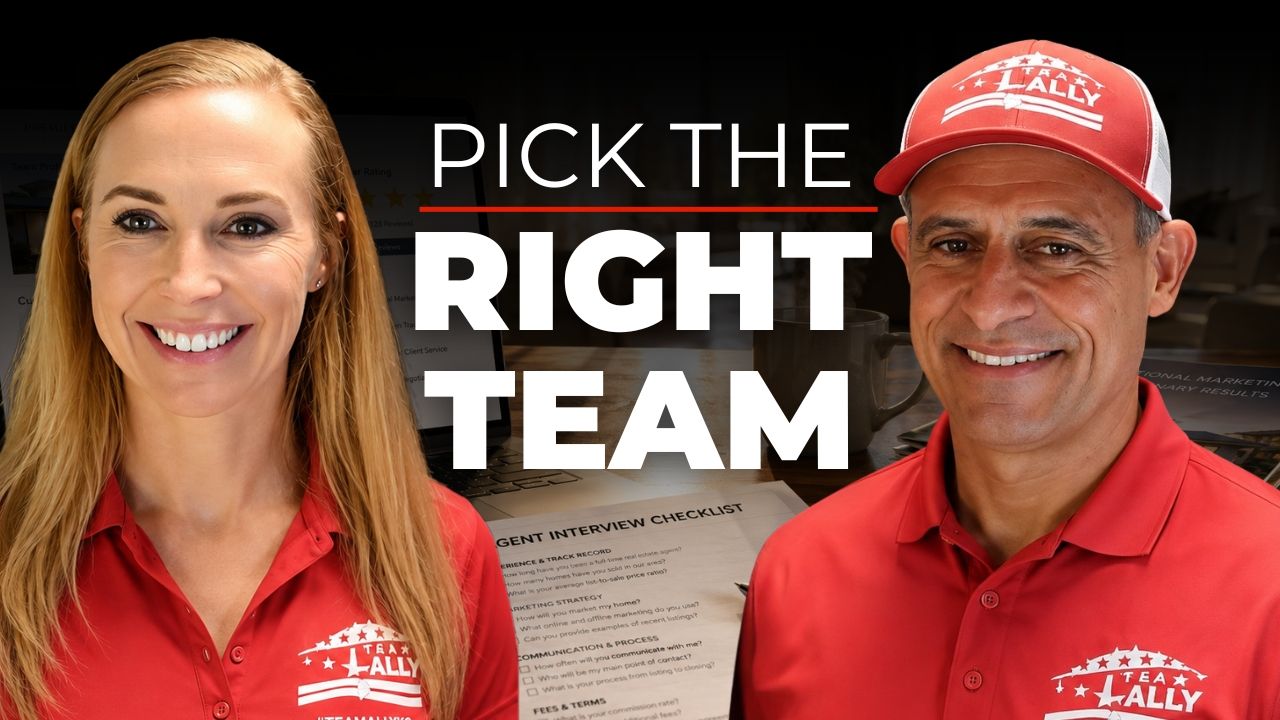
Why Buyers and Sellers Choose Team Lally in Honolulu
Most buyers and sellers spend more time picking a restaurant than they do picking a real estate agent, and it shows. When the market gets tough, the wrong agent can cost you time, money, and a whole lot of frustration. In this video, we walk you through what to actually check before you hire anyone, share a real client story that shows what the right team can do, and explain why our clients keep putting their personal relationships on the line to refer us. Watch our video to see what working with the right team actually looks like.
Where Can I Find Reviews for Kapolei Realtors?
If someone is searching for where to find...